As the 2025–26 NFL playoffs approach with the Seattle Seahawks firmly positioned as the No. 1 seed in the NFC, the organization has made headlines for the way it is managing its season ticket base. The Seahawks have begun sending formal warnings to certain season ticket holders about their plans to resell home playoff tickets, signaling potential consequences for those whose accounts appear to be used primarily as resale vehicles.
Season ticket holders received emails from the Seahawks franchise stating that tickets for the upcoming Divisional Round playoff game have been listed for resale, and that this activity could affect their future season ticket renewal eligibility. The messages remind holders that reselling is allowed through official channels but that excessive resale, defined as using the seats primarily as resale inventory rather than for personal use, can jeopardize renewal status. The team specifically encourages ticket holders to distribute their tickets directly to friends, family members, neighbors, or community groups to ensure that seats are filled with Seahawks fans rather than fans of rival teams. In short, sell too many tickets, especially premium playoff seats, and you may lose your spot in the season ticket rotation down the road.
For many teams, home-field advantage is a well-understood competitive edge. Research and league analysis show that crowd support can influence momentum, pressure opposing offenses, and even affect officiating perception. For the Seahawks, known for Lumen Field’s reputation as one of the loudest and most intimidating stadiums in the NFL, preserving that edge is especially important. Last season, observers noted that Lumen Field had become noticeably mixed with opposing fans during key home games, with chants and colors from visiting teams audible and visible. This trend correlates with the Seahawks’ recent struggles at home compared with their road performance, and part of the organization’s motivation appears to be a desire to restore a true home-turf atmosphere. From the team’s perspective, reselling to the highest bidder regardless of allegiance undermines that advantage and potentially rewards those who treat season tickets more like an investment than a fan membership.
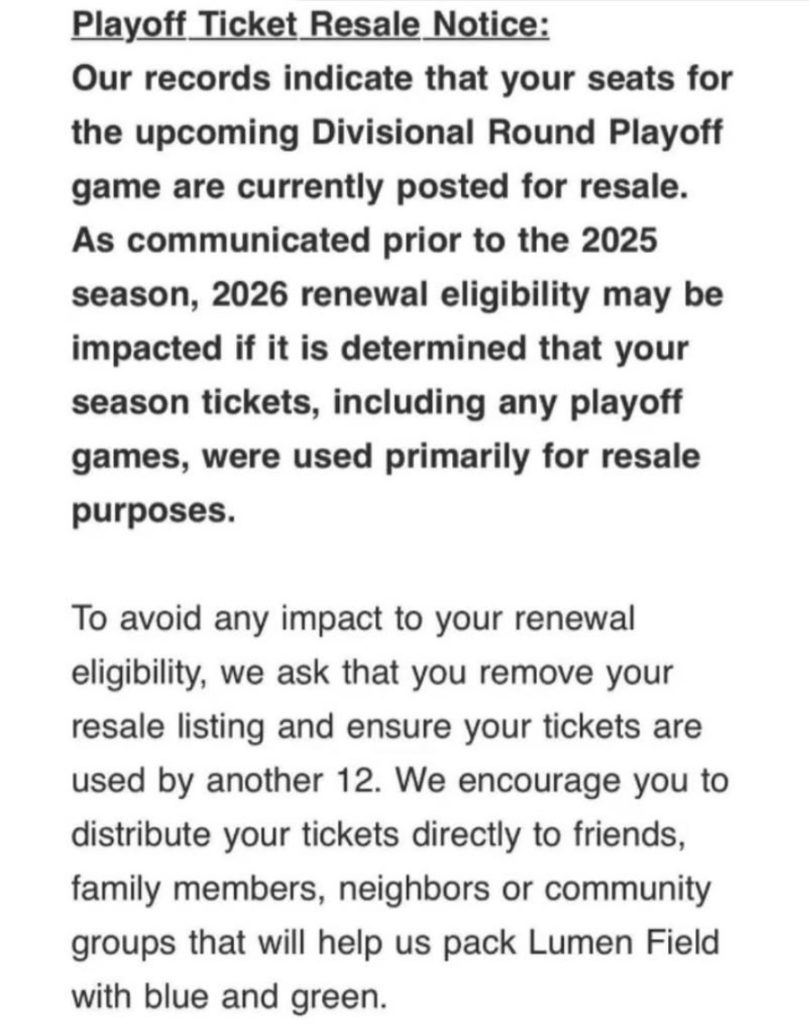
It is important to note that the Seahawks’ policy on resale and renewal eligibility is not new. It is included in the season ticket holder agreement and ticketing policies. The team explicitly states that while occasional resale is permitted, using tickets primarily for resale purposes can impact eligibility to renew the following year. This balance is tricky. On one hand, fans are allowed and even encouraged via official platforms like Ticketmaster’s NFL Ticket Exchange to resell tickets they cannot use. On the other, the franchise retains the right to interpret high volumes of resale as behavior that jeopardizes status in good standing.
The response among fans has been split. Supporters of the policy argue that it protects the integrity of the home environment, ensuring that the majority of the crowd truly supports Seattle on the biggest stages. Many long-time “12s” celebrate the team’s efforts to keep hostile fans out and reward loyalty. Critics and concerned ticket holders question whether it is fair to restrict what they paid for. For many, season tickets represent a significant financial investment, often thousands of dollars, and the ability to recoup costs by selling high-demand games is seen as an understandable option when personal schedules or finances require it. Some fans point out that online marketplace activity, even via official channels, can be difficult to police perfectly. There are also debates among supporters about how the team distinguishes between legitimate personal resale and pure profit-driven selling.
Seattle is not alone in this approach. Other NFL teams, such as the Indianapolis Colts and Green Bay Packers, have at times warned season ticket holders about resale practices affecting renewal status. League-wide, franchises increasingly balance secondary market sales with a desire to cultivate a dedicated, passionate home crowd. Still, critics of such policies argue that punitive measures can inadvertently hurt loyal fans who occasionally resell due to real-life commitments rather than profit motives. Some league observers see this trend as part of a larger push by teams to recapture control over the ticket owner-fan relationship amid rising prices and dynamic pricing models.
The Seahawks’ warning to season ticket holders ahead of playoff ticket resales represents a clear stance. The team values the composition and passion of its home crowd and is willing to enforce policies to protect it. Whether this resonates as common sense among fans or overreach by an organization remains a hot topic of debate. What is certain is that ticket ownership in the NFL is no longer just about seats. It is about community, identity, and competitive advantage, and Seattle wants to keep Lumen Field sounding like the loudest stadium in football.